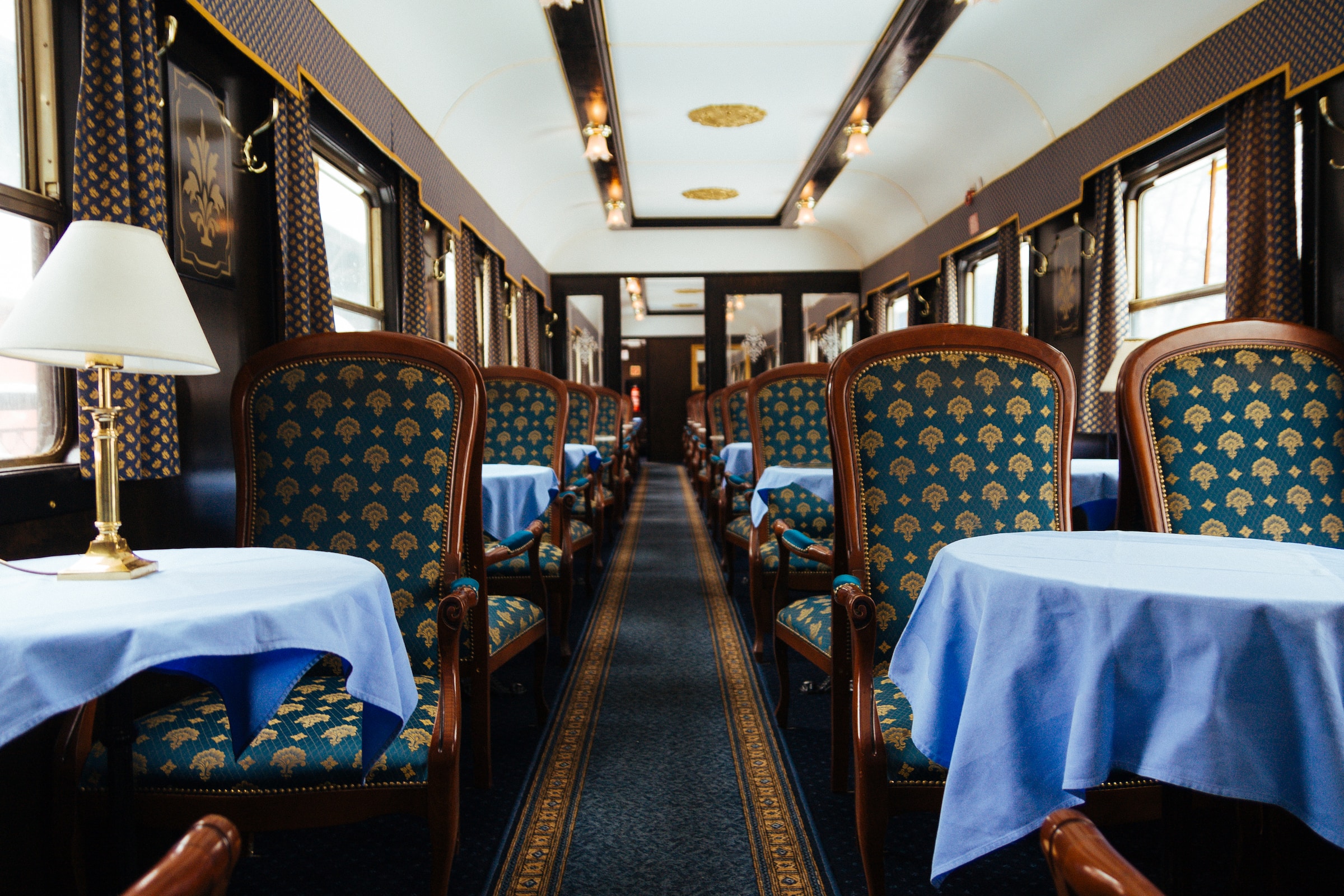
Riding the Rails in Style: The Luxury of France’s Orient Express
Often described as the most luxurious train journey in the world, the Orient Express, once the most famous line in Europe, has been synonymous with

A World in a Click
Many of you have traveled by airplane more than once. Let’s be more specific about a flight ticket for those who haven’t. This minor contract between you and a particular airline comes in paper or electronic form and gives you the right to fly to a specific destination. You can use your air ticket to check in at the airport and receive your boarding pass for boarding the plane.
Depending on the website’s conditions, a ticket’s validity may vary from 12, 24, 72, or 7 days. Usually, such a ticket does not change the price during this time (i.e., they authorize you to ‘freeze’ the tariff while you think).
Some airlines allow you to book tickets on their website for a group of 10 people or more (usually, intermediary websites make reservations for up to 9 people).
Attention! When booking a flight ticket online, we can pay online or afterward by traveling to the company’s office or travel agent where you made the booking.
Necessary: Some websites only allow you to book tickets while purchasing.
You can make reservations at the offices of tour operators or airline ticketing companies.
You can purchase airline tickets:
Be careful when choosing the website where you want to purchase your tickets. If it’s the airline’s official website, you can be safe, but you must be extremely careful if it is an intermediary website. What to consider in this case:
Yes, it is possible. There are two options:
If the ticket is returned, the refund amount will be negotiated with the company where the ticket was purchased. It may be lower than the amount spent on the ticket, as cancellation fees may be deducted. Before booking your ticket, you can read the purchase terms on the company website.
Attention! There are fares for which airfares cannot be refunded.
If you miss your flight and your check-in is completed, your flight ticket will be canceled. So when you see that you will be late, contact the airline staff to determine whether you can reschedule or refund your ticket.

Many factors influence the cost of a ticket; let’s briefly go over the main ones:
If you plan to buy your ticket during the week, it may be cheaper, for example, on a Tuesday or Wednesday. On Fridays, Sundays, and public holidays, airfares are more expensive.
The more comfortable the departure and arrival times at your destination, the more expensive the ticket will be. Often, tickets for the night and very early flights are cheaper.
Here it is worth clarifying that fares come in several types. Also, different airlines can offer their personalized rate to their customers (see below).
Oddly enough, most times, round-trip tickets cost the same or less than a single ticket.
It is best to purchase your ticket a few months in advance, especially during the holiday season. An earlier booking can save on the cost of the ticket. Sometimes there are also good deals just before departure.
There are months when few people fly to a particular destination, or conversely, many. This dramatically affects the price of tickets. Depending on the season, they may be more expensive or cheaper.
Some “five-star” airlines have relatively high ticket prices: Korean Air, Japan Airlines, Lufthansa, Cathay Pacific Airways, EVA Air, Garuda Indonesia, Hainan Airlines, Qatar Airways, Singapore Airlines, ANA All Nippon Airways, and Asiana Airlines. And then there are the low-cost airlines, which have fewer services and facilities, but the tickets are cheaper.
Here it’s simple – the more luggage, the more expensive the price, especially if it is oversized or valuable (see below).
The bigger the airport, the higher the airport charges, affecting the ticket price. Low-cost airlines are based on “cheaper” terminals or airports.
Each country sets its amounts, consequently affecting the ultimate cost of airfare.
Some destinations are not very tourist. There are often a few airlines flying. They may set their overpriced fares because of the lack of competition and the low number of passengers. Conversely, there is stiff competition in popular destinations so that you can find reasonably priced tickets.
Sometimes other reasons, such as currency fluctuations in the financial markets or increased fuel costs, can also affect a ticket’s price.

As we have written, each airline may offer different fares, affecting the ticket use’s cost and conditions.
These are international benchmark fares that are not affected by airlines. They are set by the International Air Transport Association (IATA)
They first receive encouragement from IATA, and they are usually quite expensive. You can buy a flight ticket at least a week before departure, and it is impossible to return it.
Such fares are cheaper than published fares but have certain conditions and restrictions. Tickets for these fares are sold only in the city where the departure will occur.
These are very convenient—mainly first (F), business (C), and economy (Y) classes. There are a few restrictions. A ticket can be booked up to a year in advance. It is possible to change the dates and itinerary free for the trip duration. Tickets at these fares are refundable, and the rate is almost entirely refundable with no penalty (only the service charge applies).
Such fares have minimum and maximum stay requirements at the destination. The minimum time is from one day (often Saturday to Sunday) and up to one week. The maximum is from one to six months, and as a general rule, you can change your ticket’s date and route with no penalties or restrictions. It is also possible to buy tickets with an open date. These are usually shown by the two letters EE.
These are the cheapest tickets available. Most passengers use them, but it must be noted that there are restrictions. Rarely can you get a refund; if you do, you will only get half the ticket price. Changing your departure and arrival dates is also tricky, and you may be fined. There is a fee for data changes.
Applies to a child’s ticket. It is free (without seat assignment) for infants from 0 to 2 years old; it is free (without seat assignment), or 10% of the basic fare. For kids from 2 to 12 years old – with individual seats – 25, 50, or 75% cheaper than a regular ticket. All airlines have a discount policy.
Depending on the airline, this fare may apply to persons under 24, 25, or 26 years old. Often this fare applies to average and excursion fares. Usually, ticket dates are fixed, but sometimes you can buy a ticket with an open date.
This fare applies only to flights to certain countries. It entitles you to a 50% discount on the ticket for accompanying spouses and children aged between 2 and 25 years. This ticket is valid for one month.
Not all airlines have this fare. If the passenger is 55 or 60 years or older, there’s a 25% to 30% discount on airfares. It also does not apply to all destinations, and it is often impossible to change departure and destination dates or return the ticket.
Again, this fare is unavailable on all airlines and not all destinations. A 50% discount is available for the second spouse in the first business or economy class. This flight ticket is challenging to refund and is valid for one month.
With the APEX fare, the departure and arrival dates are strictly fixed, and it is possible to rebook or refund the ticket, but for a fee. Such a ticket is valid for a few days up to 3 months. It must be purchased at the time of reservation, a specific date before departure.
The round-trip departure dates are fixed. Reservations and redemptions are made at the same time. The dates on the ticket can only be changed after additional payment. There are also restrictions on departure days and periods of stay, including penalties for not using it. The validity under this fare is a maximum of 3 months.
This is the cheapest group of tariffs. Given this, this fare has many limitations; for example, it is valid only on certain days, and the deadlines for purchasing a ticket are more often 3, 7, 14, and 21 days, and vice versa, not earlier than 3, 7, 14, or 24 days. This group includes:
Similar to SUPER SAVER fares, each airline develops its rates. They have stringent conditions for refunds or changes of dates and itineraries.
These are intended for tourists, sports, or school groups. There are restrictions on the length of stay and the number of people. Very common:
Low and unpredictable fares are often inconsistent and appear in the off-season on different airlines. Each company sets fares’ conditions and prices independently and can be quite favorable for the passenger.
Flight Ticket Fare
As for the cost of children traveling by air, it depends on the age of the child:
Many airlines charge no fees for a child carried by an adult without a seat (but some rare exceptions require that you pay 10% of the ticket price). It is also compulsory to get a separate ticket for the child.
Attention! Some airlines allow infants at least two days old, seven days old, or 14 days from birth to travel.
Important! If you fly with a newborn baby less than seven days old, you may be required to present a doctor’s certificate confirming the infant’s physical fitness to travel by air.
A child travels at the child fare with a separate seat. Such a flight ticket can cost 25-50 % cheaper than usual.
The rate is the same for an adult with a separate seat on board.
Attention! If you buy round-trip tickets for children of 2 or 12 years old on the departure or return dates, the infant or child fare may not apply. As for the 2-year-old, the child tariff will have to be purchased for a 12-year-old, which means the adult fare. Some airlines make concessions and allow you to fly with the previously purchased price or use another one for a return.
Important! Children under a certain age (often up to 12) may not sit alone in a row, i.e., at least one adult must sit in the seat next to them or across from them.
Many airlines provide an escort for your child during the flight. The flight must be direct and with no transfers. An employee of the airline will accompany your child to the aircraft. There, the flight attendants will take care of your child. A staff member will accompany the child from the plane to the receiving end on arrival. Unaccompanied minors usually are between 5 and 14 years old. But even older children (up to 18) can request this service.
You must book the escort service in advance (at least a few days before departure). Keep in mind that this is a separate, chargeable service. It costs approximately US$50 to US$150. The ticket price for a child will be the same as for adults.
Many companies also allow teenagers to fly independently, but your child needs a parent’s consent to cross the border if it is an international flight. It should state the country and the duration of the planned stay.
Important! A parent or legal guardian must accompany children from 0 to 2 years of age.
The exact age and conditions of such flights must be checked with the individual airline.
The following documents may be required for a child to travel abroad.
There are a couple of things to consider for flying when pregnant:
Our world is developing rapidly, and now people with disabilities fly over any distance, which is a welcome development.
Currently, many airlines adhere to international regulations for transporting such a passenger.
Let’s take a step-by-step look at what to do in this case (this information applies to both adults and children with disabilities):
Important!
Attention! If the airline does not safely carry the person with disabilities on the plane, they may refuse to accept them.

You can check in for your flight:
Airline website or App. Usually, such check-in opens 24 hours and closes 1 hour before departure. You can get the boarding pass using the terminal at the airport, or you can do nothing else at all, as the airline will email you an already prepared ticket. To use it on your smartphone, many airlines offer to download their App.
Necessary: With some airlines, you must collect your boarding pass at the airport check-in desk even after online check-in.
Attention! Some airlines (especially the low-cost ones) require you to check-in online before your flight. If you don’t book your trip well in advance (2-3 months before your flight date), you may notice, for example, that you will have to pay some extra money for the amount you spent on your flight ticket. And these requirements are not always imposed by the same company in every country. You may have to check in online in some countries, while you may not find such an obligation in another country.
You need to check in at the airport at the check-in desk. It starts 2 – 3 hours and ends 1 hour / 45 minutes before departure.
An airline employee will help you or check-in yourself at a specific electronic terminal. After such check-in, you will receive your boarding passes.
Important: You must come to the registration:
Each airline sets its baggage allowance.
This is the luggage you check in at the check-in counter. These are your heavy bags and suitcases.
Sometimes passengers do not have any luggage with them, just hand luggage.
There are two systems for determining free baggage allowance worldwide:
A passenger of any class is allowed two pieces of baggage, weighing from 23 to 32 kg per piece (the weight of two suitcases rarely adds up), and with dimensions not exceeding 203 cm (in total: width, height, length) for First and Business Class and 158 cm for Economy Class. This baggage allowance is often found on intercontinental flights and upgraded fares. The number of free baggage items shown on the ticket is usually 1PC for one baggage item, 2PC for two baggage items, and 3PC for three baggage items. If your fare does not include a free baggage allowance, it is shown as NIL.
The general rule for free baggage allowance by weight varies between 10 kg per passenger. Most expensive airlines try to adhere to the following norms:
The dimensions of your luggage also have important features. For example, in the sum of all sizes (width, height, length), the baggage must not exceed the following figures:
You will take this luggage on board the aircraft (e.g., a small backpack, men’s bag, women’s purse, laptop bags, etc.)
Your cabin bag dimensions must not exceed 115 cm (width 20, height 55, length 40). Some standard airlines allow larger cabin baggage dimensions (e.g., 203 cm).
By weight, hand luggage on many airlines may not exceed 10 kg for economy class and 15 kg for first class and business class. More budget-friendly companies set a limit of 8 kg or even 5 kg. Above the limit, you usually have to pay a surcharge.
For the exact parameters and weights, check the website of your airline company.
Important! Some airlines do not include free carry-on baggage in your air ticket price.
Please note: Low-cost airlines may count a small personal bag as one carry-on bag. So if you also have a backpack you plan to take in the cabin, pay extra for it. So choose your pack carefully for these journeys.
Besides hand luggage, many airlines allow you to bring the following items in the cabin:
It is luggage that does not fit into the general parameters of weight or size (e.g., skis, bicycles, surfboards, musical instruments, traveling golf bags, diving equipment, etc.). You will typically be charged a fee for this baggage, and its transport must be arranged in advance with the airline. To do this, send your request to the airline and provide the flight number or reservation, details, the size, and the weight of the luggage you plan to take with you.
Valuable, fragile items and musical instruments are carried in the cabin. If the dimensions allow it, they may be counted as regular hand baggage (when the passenger has no other hand baggage). If not, some airlines offer “cabin baggage” with a separate seat assignment. A fee is charged for this service.
Some airlines also oblige you to buy a full ticket for such baggage. There are no discounts or reduced fares, and no other luggage is included in the ticket. The passenger will pay for a new one if their baggage only occupies one seat and does not weigh over 75-80 kg. If its dimensions are too large, the luggage will be carried in the luggage compartment. When the parameters are exceeded, paying for the seats required for transporting non-standard baggage is necessary.
As for sports equipment and large-sized musical instruments, it is also necessary to inform the airline a few days in advance and make a reservation for the luggage.
Remember that some airlines offer free sporting equipment on top of the flight ticket if you don’t have an extra suitcase.
Non-standard baggage that does not require special handling (or is very bulky) will be carried in the aircraft’s baggage hold. The service for such baggage is also likely to be chargeable.
Fares and costs vary from airline to airline. The conditions for handling such luggage also differ, which you can read about on the company’s official website.
It’s free. You can drop it off at the aircraft ramp or telescopic arm. Some remarks:
This luggage is handled without the passenger by a separate consignment note. An individual owns it and crosses the border separately from the owner (this may be at different times or places).
Besides your belongings and documents, you can carry in your baggage that belongs to your air ticket:
You can also make such a claim if your luggage is delayed. A clarification should accompany it:
A request for compensation can often be sent from 15 days to 2 years after the luggage’s loss/delay. All companies have different deadlines that must be clarified when making the search request.
Important! If your luggage has been damaged during transit, you can also request compensation from many airlines. You may have your luggage repaired (e.g., bag, suitcase, tools, etc.). If this is not possible, be reimbursed for the cost of the damage. Besides the claim, you need to send the following:
As for food on board, it depends on the particular airline. The cheaper your flight ticket and the more budget-friendly the airline, the less likely you will receive a meal during the flight. If your flight is less than 1.5 hours, you should also not expect to receive free food.
The conditions for transporting pets (usually dogs and cats) vary from airline to airline. It is advisable to check the company requirements you want to travel with on its website.
However, when buying a flight ticket with pets in mind, it is essential to know some general rules:
An airline may sell more tickets for seats on a plane than there are. For example, there are 80 seats, and the company has sold 85 tickets. Sometimes overbooking occurs when a plane is changed to a smaller size, or there is an urgent need to carry extra passengers. It happens because statistically, about 10% of passengers are late for their flight or do not arrive.
This strategy is usually employed on frequent popular flights, of which there are several a day, and when it is quick and easy to rebook a passenger onto a new flight.
In case of overbooking, a customer who does not have enough seats may be removed from the flight. This happens forcibly or voluntarily when the passenger accepts a seat on the next flight.
Important: If you plan to request a refund, ask the airline to stamp your boarding pass or itinerary receipt to confirm that you have been denied a seat on the plane.
Many airlines have various ancillary agreements, including codeshare agreements (each airline has a specific IATA code). This allows them to share the same flight. For example, a passenger has bought a ticket from airline “A” but flies on the airline plane “B.” The departure board will show two IATA codes, airlines “A” and “B.” Sometimes, two flights with the exact departure time and the same route are shown side by side.
Various airline alliances often use Codesharing to save on airfares and use award cards more often.
Here are three of the most popular alliances:
What else you need to know about codesharing

Some nuances should be considered if your flight is a transit flight (i.e., with a connection to another city or country). Let’s look at the main ones:
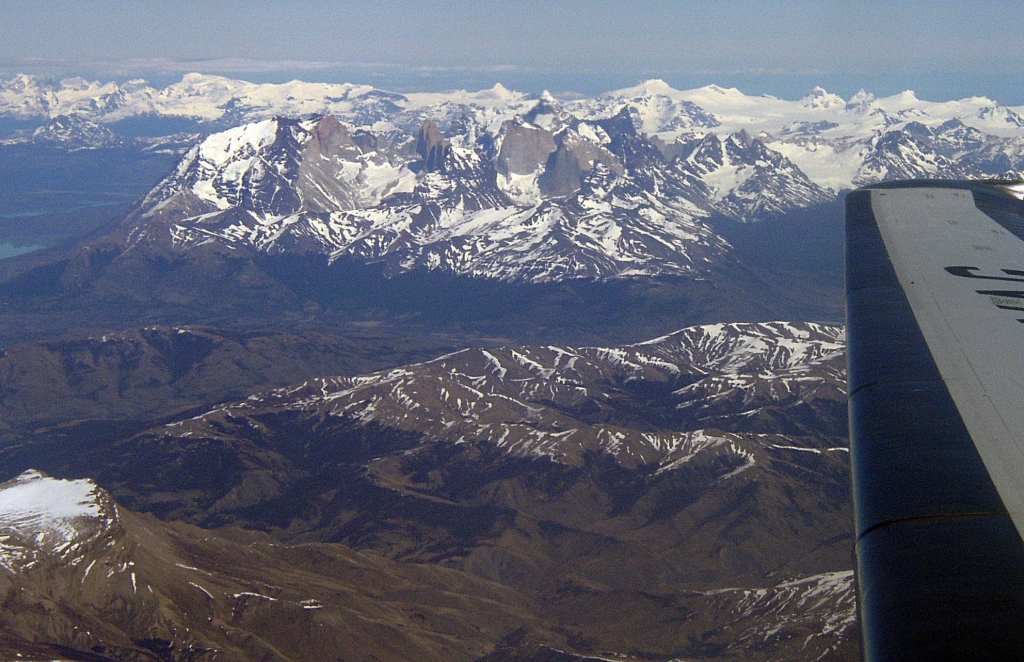
There are various national or international airlines globally, which come in several types and have some differences.
These are the airlines we all know, and they are found in almost every country in the world. Let’s look at some general facts about them:
These are the same budget airlines on which you can fly relatively cheaply to many cities worldwide. They often offer cheap tickets. But they have quite a few nuances. Let’s look at the following:
The charter flight is a full or partial rental of the aircraft from a standard airline by a tour operator. The airline does not worry about the tickets sold; the payment is for the plane’s rental. We can say that these are flights for holidaymakers. We would also like to highlight the following about charters:
There are several classes of service, which vary in their cost:
Let’s look at the differences and advantages of each.
It’s the most luxurious class of service. An air ticket in this class costs much more than the economy, but the comfort level is off the charts.
First class is usually found on long-haul intercontinental flights but occasionally on continental flights. At the front of the plane, before business class.
Besides business class facilities and services, you can watch films, listen to music and play video games. There are often showers and separate toilet facilities.
According to the restaurant menu, the food is excellent and served in porcelain dishes. Various meals, snacks, and alcoholic and non-alcoholic beverages are available. Some airlines have chefs specifically for this class, and visiting the bar is possible.
The seat in this class is very comfortable: it has a massage function and is made from expensive, high-quality materials. It may look like an enclosed compartment or cabin on some airlines, with a bed and shower inside. The distance between every row is 150 – 250 cm, and the width is 60 – 80 cm.
First-class has a separate check-in desk and lounge. It offers the following plus:
Baggage allowances are much higher, more comfortable, and better than in business class.
This is the second most common class of service. Tickets in this class cost two or three times as much as economy class, but the comfort level is much better.
Business class involves small additions to the menu and more attention from the airlines’ flight attendants.
Business class is not available on all aircraft. It is usually located before economy class, at the beginning of the airplane, or in the middle.
There are recliners and pockets for magazines; you can also ask for a plaid with a pillow and socks. Some airlines may also offer headphones, a hygiene kit, an eye mask, earplugs, a press, and, occasionally, Wi-Fi.
Meals in business class are an order of magnitude better than economy class. Food is served in porcelain dishes. It is always present and accessible. You can choose the main courses from the menu and various snacks and drinks, including alcoholic ones.
The seating arrangement is more spacious, usually four seats in a row, sometimes six (depending on the aircraft configuration), but with more space between them than in economy class. The distance between rows is approximately 85 – 200 cm, and the seats are 50 – 60 cm wide. They are comfortable and can be reclined to 160 or 180 degrees.
A separate check-in desk is available for business class. Passengers are also provided with a separate lounge where complimentary refreshments and meals can be included. Boarding is preferential or by a different transfer.
The weight of your free hand baggage is increased. This may be 5 or 10 kg more than the norm for economy class. Also, some airlines allow you to use two pieces of hand luggage. Often business class passengers get their luggage first on the belt.
If you fly with a low-cost airline, it is most likely that economy class is the only one in the cabin. It is the most popular and cheapest of the service classes. If there are other classes on the plane, the Economy Class is in the middle and back of the aircraft.
Some airlines have economy premium or economy plus fares, which mean economy class but with more comfort, such as wider seats or boarding via a business class counter.
You can’t expect any frills in this class. If you’re cold, a folding table, a magazine pocket, a blanket, and a pillow are provided. Some airlines may also offer headphones, an eye mask, earplugs, and a hygiene kit on long flights.
Meals are usually available on long flights (over 1.5 hours). Short flights may offer tea, coffee, water, and snacks. In some companies, meals are offered only at extra cost or not at all. Food in economy class is served in disposable containers.
A single row can have six seats
or
They are closely spaced, and the distance between the rows is 75-90 cm. The width is also minimal, around 45 cm. They can be reclined but not too far back. In some aircraft, it is impossible to do that because of their tightness.
The check-in counter for economy class is standard. You will often have to queue long for seasonal flights or popular destinations. Boarding is via a telescopic gangway, or passengers are taken to the plane by bus. Sometimes, you must walk to the plane (often in Western European countries).
The airlines usually set weight limits for freehand luggage, which should not exceed 5kg, 8kg, or 10kg. Some companies do not include it in the flight ticket price, and you must be paid separately.
For luggage, the maximum weight allowed free is 23-25kg. Most low-cost companies charge a separate fee for baggage.
Many passengers have their favorite seats. For this reason, many companies offer to reserve a seat in advance when buying a flight ticket. Let’s briefly examine the pros and cons of the different areas onboard.
As for the location of the seat, then:
As for places near emergency exits, there is usually more space, but there are specific nuances:
If the airline is NOT a low-cost one and a seat assignment is NOT a paid option, you can change your seat only if there are available on the plane.
To select a seat on the plane, you can use the SeatGuru website.
Let’s look at what you can expect in a particular situation.
If the airline has informed you in advance that a flight is being rescheduled or canceled, you can
The plane you are flying on has been diverted to another airport
This is a reasonably unusual situation, but sometimes it can happen. Usually, planes are redirected to another airport
The airline provides additional transport (taxi or bus) to the city or airport the passenger originally traveled to. When the situation requires it, the airline will reimburse the hotel and meals (sometimes, depending on the airline, the ticket).
Flight delayed or canceled (applies to European Union countries, including Russia, Norway, Iceland, Switzerland, French Guiana, Martinique, Mayotte, Guadeloupe, Réunion, Saint Martin, and the Americas)
Options for action:
In most countries in Asia and Africa, you can take a different flight at no extra charge offered by the airline.
You can also get your money back for the ticket.
As far as free airport services are concerned, each country and airline independently regulate these rules. For example, many leading airlines in India, Morocco, South Africa, and Europe offer you drinks and food if your flight is delayed by 2 – 4 hours. If your flight is rescheduled to the next day, you will receive a free overnight stay in a hotel.
In some countries, you can expect to receive financial compensation. For example, many large airlines pay monetary compensation in China if the flight is delayed by 4 – 8 hours (about 200 RMB) or over 8 hours (400 RMB). Some small Chinese airlines will only pay a 200 – 300 yuan refund if their flights are delayed by over 8 hours. Also, there are companies where such compensation is not provided.
Important! According to European Regulations, you can count on monetary compensation for flights from Europe.
In India, the air carrier must notify you of the cancellation two weeks before departure. It must give you another ticket for the new flight no later than 2 hours from the canceled flight if notified later. In case these conditions are not met, the airline must refund you the total price of the air ticket + monetary compensation:
Also, in India, you can count on compensation if you run out of seats because of overbooking and the next flight has to wait over one hour.
In Morocco, all airlines are subject to European Regulation 261/2004. So, you may count on compensation according to the European standard.
In South Africa, big airlines often compensate for overbooking by giving the passenger a voucher for a meal or buying another ticket.
In Egypt and Madagascar, you can expect compensation only if you are not warned and not offered an alternative flight that departs within two hours of the canceled one. Also, in Egypt, you can count on compensation in some situations because of overbooking.
Important! If you are entitled to monetary compensation by law, you can only receive it if the airline is at fault (for example, the plane has broken down). If the flight is delayed because of weather, security risks, political unrest, or an unforeseeable strike at the airport, you are unlikely to receive money.
If the child flies free, there is no refund, BUT if you have paid any fee, the child is entitled to a refund for the canceled or rescheduled flight.
If your child’s ticket was not at full fare but cheaper, they are still entitled to a full refund from the airline. The amount of compensation depends on the booking fee, the flight’s distance, and the delay length.
You can purchase separate insurance before you travel:
Some additional tips:
To summarise, let us say again:
Enjoy your flight! We hope our article was helpful to you. Don’t forget to take the right amount of luggage and prepare all the documents before your trip.
Often described as the most luxurious train journey in the world, the Orient Express, once the most famous line in Europe, has been synonymous with

Experience the splendor of the French Wine Country, a destination that beckons oenophiles and travelers alike with its exquisite wines, breathtaking landscapes, and rich cultural

The vibrant city of Barcelona, renowned for its magnificent architecture, also hides a gourmet paradise within its streets. Rich in gastronomic diversity, the city boasts

Embark on a fascinating tour of Provence, a region in southeastern France delights with its timeless beauty, cultural heritage, and culinary wonders. In this article,

Uncover the magic of Spain’s most enchanting landscape as we guide you through an immersive tour of the breathtaking Teide National Park. Nestled in the

Welcome to Sicily, a mesmerizing island nestled in the heart of the Mediterranean! With its rich history, breathtaking landscapes, delectable cuisine, and warm hospitality, Sicily